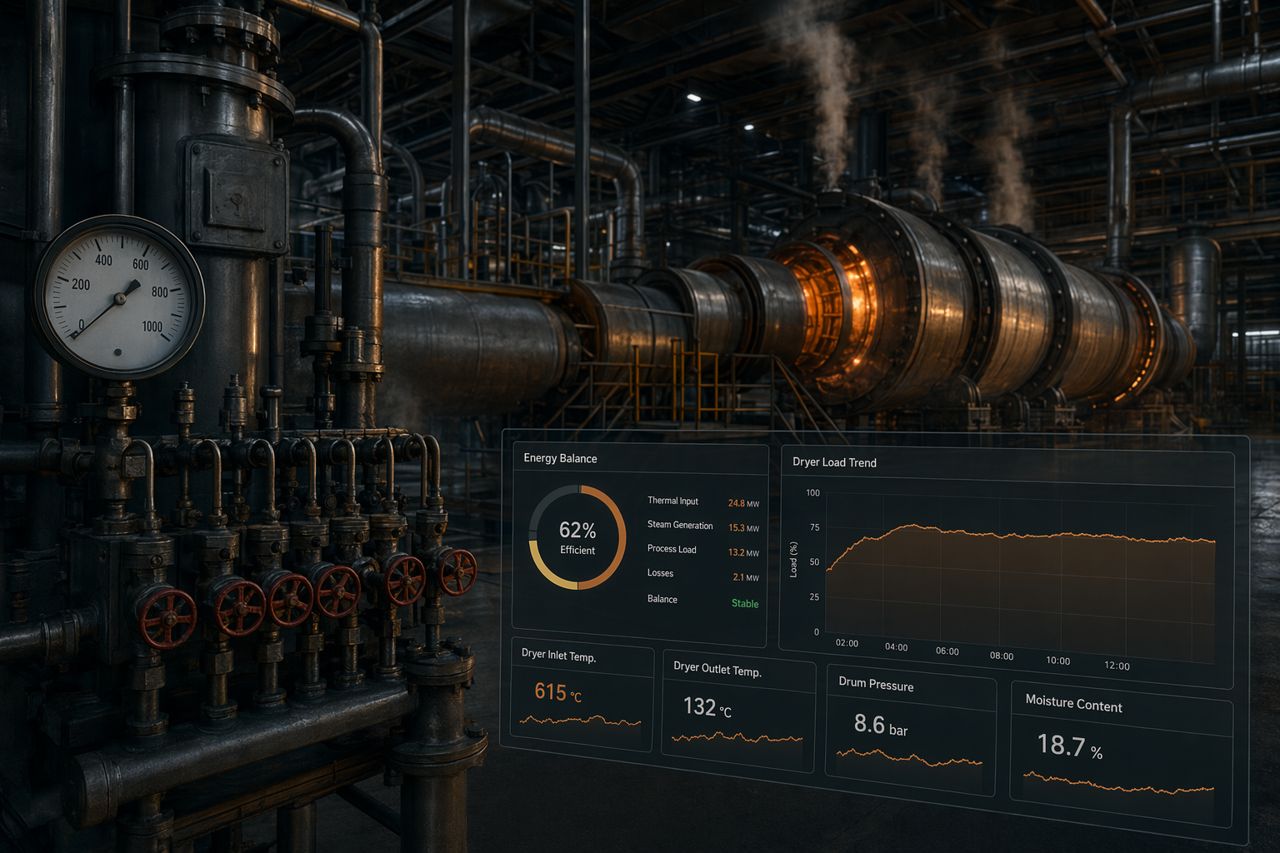
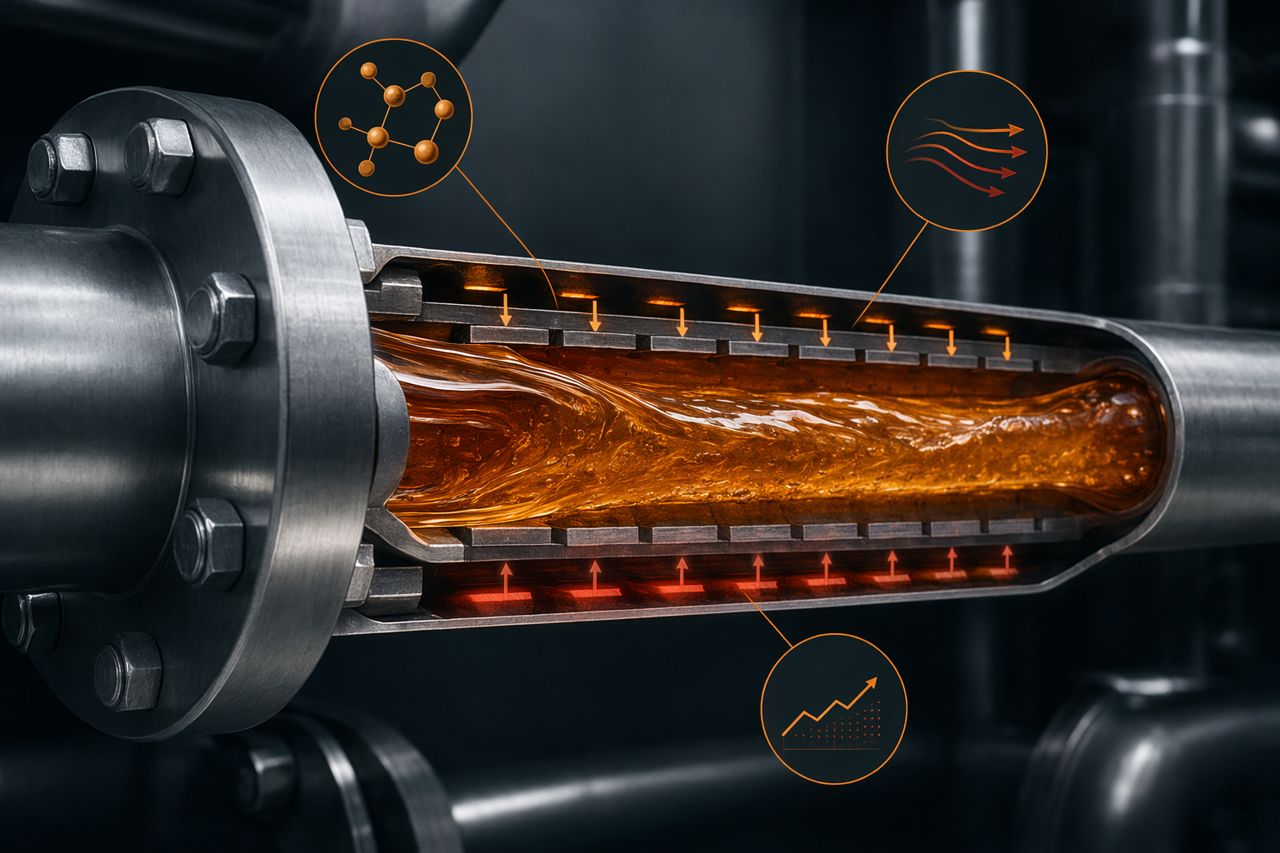
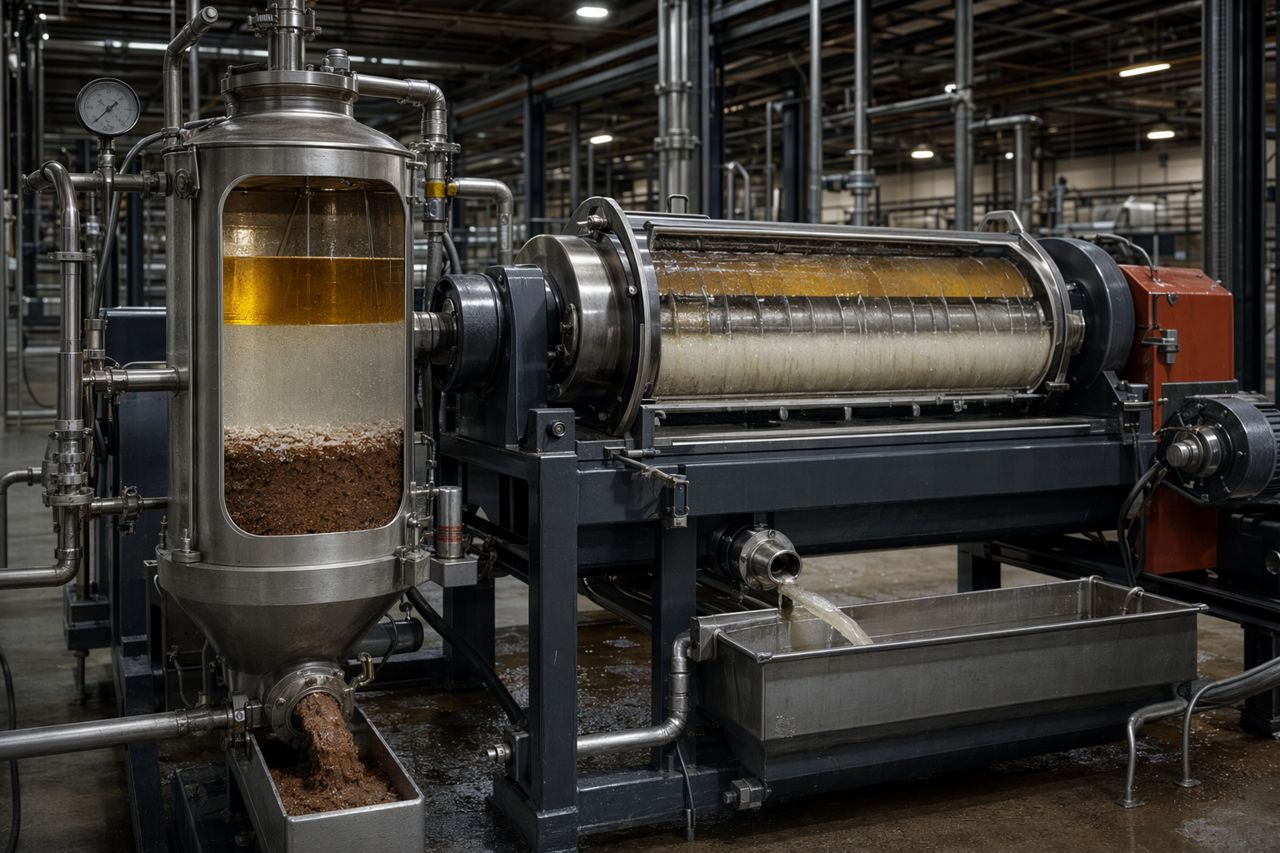
Cooker and Dryer Energy Balance When Byproduct Streams Vary
Rendering plants rarely get the same raw material twice. Feather, blood, soft tissue, bone, fat trim, offal, and mixed byproduct streams can shift by supplier, season, hold time, grinder condition, and receiving schedule. That variability lands directly on the cooker and dryer.
Rendara works as an enzyme supplier for rendering plant hydrolysis with a practical objective: help plants control hydrolysis behavior so heat, viscosity, separation, and moisture removal stay inside an operating window the floor can actually run.
When the feed changes, the plant does not just see a new recipe. It sees a new energy balance.
Why variable byproduct streams hit energy demand
A rendering system spends energy in several places at once:
- Heating incoming material to process temperature
- Breaking down structure enough for pumpable flow
- Driving water out through the cooker and dryer train
- Holding thermal conditions long enough for safe, consistent processing
- Separating fat, water, and solids without excessive rework
- Managing odor load generated by overheated or poorly controlled material
A wet, soft, high-protein stream behaves differently than a higher-fat stream with more bone or connective tissue. A stream with longer receiving hold time may enter the process with higher viscosity, stronger odor potential, and less predictable separation. A fine grind can transfer heat differently than a coarse, stringy feed that creates uneven cook.
The result is familiar: steam demand rises, dryer residence time stretches, fat recovery becomes less clean, decanter performance tightens, and operators start compensating with heat.
The hidden cost of using heat as the only correction
Heat is a powerful tool, but it is not a precise correction for every variable feed condition. When operators respond to inconsistent material only by adding temperature or time, the plant can create secondary losses:
- Higher dryer load from excess retained water
- Darker or overprocessed meals
- Increased fouling and buildup in thermal surfaces
- More difficult pumping due to viscosity swings
- Higher odor load into air handling systems
- Slower separation and higher solids carryover
- More rework when fat, water, and protein phases do not split cleanly
The issue is not that cookers and dryers are inefficient by design. The issue is that the upstream material is moving faster than the control strategy.
Where controlled hydrolysis changes the balance
Enzymatic hydrolysis gives the plant another control lever before the dryer has to solve everything with heat.
A well-matched enzyme program can help condition protein-rich and mixed byproduct streams so structure breaks down more predictably. In practical plant terms, the target is not a laboratory number. The target is a better-running mass:
- Lower or more stable viscosity before transfer
- More uniform hydrolysis through the tank or cooker feed
- Cleaner release of entrained fat
- Less resistance across pumps and lines
- More consistent decanter and separator behavior
- Lower thermal overcorrection in the dryer
- Improved yield recovery from material that would otherwise resist separation
For a rendering plant, the value is operational. If the material flows, separates, and dries more consistently, the energy balance becomes easier to hold.
What to watch on the plant floor
Energy balance should be managed through operating indicators the team already trusts. Rendara recommends reviewing the pattern across the line, not only one temperature point.
Receiving and preparation
Track stream mix, holding time, grind consistency, visible fat load, and abnormal odor before the material reaches the cooker. These inputs often explain later dryer behavior better than the dryer panel alone.
Hydrolysis and cook zone
Watch viscosity trend, mixing quality, torque, pump response, foam tendency, and how quickly the material moves from raw structure to pumpable liquor. If the process depends on repeated manual heat correction, the hydrolysis window may be too wide.
Separation
Look for fat clarity, solids carryover, rag layer behavior, bowl load, and centrate quality. Poor separation can push water and solids back into the thermal load, making the dryer do work that separation should have removed.
Dryer
Monitor inlet load consistency, exhaust behavior, discharge moisture trend, residence-time pressure, fouling frequency, and product color. A dryer that is constantly being chased is often receiving an unstable upstream mass.
Building an energy-balance control plan
A practical plan does not start by changing everything. It starts by isolating where variability enters and where energy is being spent.
1. Segment incoming streams by behavior
Do not group only by supplier or species category. Group by how the material behaves in the line:
- High water, fast odor development
- High fat, difficult phase release
- High connective tissue, high viscosity
- Bone-heavy or mineral-heavy load
- Fine slurry versus coarse mixed feed
- Rework stream blended back into fresh material
This gives the plant a better basis for enzyme selection and process timing.
2. Set a hydrolysis window before the dryer
Define what the material should look and behave like before it reaches the main drying load. The window may include pump response, visual flow, separation response, and the absence of stringy or gelled pockets.
The goal is not to over-hydrolyze. The goal is controlled breakdown that supports yield recovery and downstream stability.
3. Match enzyme strategy to the bottleneck
Different rendering plants are constrained by different issues. One plant may need viscosity reduction ahead of transfer. Another may need cleaner fat release. Another may need more uniform hydrolysis so dryer load stops swinging.
Rendara helps evaluate the stream behavior and align the enzyme approach to the actual bottleneck instead of adding a generic processing aid and hoping the dryer improves.
4. Validate against operating outcomes
The best validation is plant performance. Track before-and-after patterns such as:
- Dryer load stability
- Steam valve movement
- Transfer pump strain
- Decanter consistency
- Fat recovery quality
- Meal color and discharge uniformity
- Cleaning frequency
- Odor load during peak receiving periods
- Rework volume
These outcomes tell the plant whether hydrolysis control is improving the total system, not just one process point.
Common mistakes that waste energy
Treating every stream like the average stream
Average feed data can hide the worst operating shifts. Energy spikes often come from edge-case loads, not daily averages.
Correcting viscosity only with dilution
Adding water can improve pumpability in the short term, but it adds thermal load downstream. If the dryer becomes the water-removal solution for a viscosity problem, energy cost moves instead of disappearing.
Waiting until the dryer to fix upstream variation
The dryer is designed to remove moisture, not to correct poor hydrolysis, poor separation, and unstable feed structure all at once.
Overprocessing to gain safety margin
Excess thermal margin can reduce throughput, darken meal, increase odor, and drive fouling. A tighter upstream hydrolysis window can help reduce the need for blunt overcorrection.
Where Rendara fits
Rendara supplies enzyme solutions for rendering plants that need more control over hydrolysis, viscosity, separation, and yield recovery. We work with operational constraints: receiving variation, existing tanks, cookers, decanters, dryers, available mixing, hold time, and cleaning cycles.
The objective is not to redesign the plant on paper. The objective is to make the actual line run with fewer swings and better recovery.
If your cooker and dryer settings change every time the byproduct stream changes, your energy balance may be telling you the hydrolysis step needs tighter control.
60-second faceless explainer
[Embedded faceless explainer video: amber protein liquor through stainless process paths, cooker and dryer load indicators, hydrolysis tank cutaway, clean separation, and stable dryer output. Voiceover with on-screen subtitles.]
Request a quote
If you are evaluating enzyme support for rendering plant hydrolysis, share your stream type, process bottleneck, and target outcome. Rendara can help identify a practical enzyme approach for viscosity control, yield recovery, separation stability, and dryer load management.